
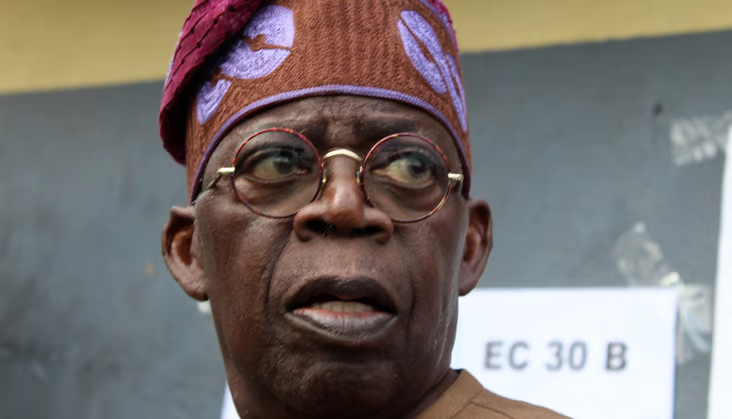
Since Bola Tinubu took office as Nigeria’s president in May 2023, his administration has been marked by a flurry of public appointments, often reshuffling officials with regularity. The president’s power of patronage has become one of the most discussed aspects of his tenure. But alongside these appointments, Tinubu’s time in office has also been dominated by a high rate of dismissals, with many officials being sacked on allegations of corruption. In less than two years, Tinubu has removed more people on corruption grounds than his predecessor, Muhammadu Buhari, did throughout his eight-year presidency. Tinubu’s stance on fighting corruption has been forceful, and he has repeatedly promised to confront the problem head-on. However, despite his firm words, there is an undeniable challenge to his credibility—one that directly impacts his ability to convince Nigerians and the international community that his anti-corruption rhetoric is genuine.
The controversy surrounding Tinubu’s wealth is at the center of this credibility issue. Unlike his predecessors, who entered office with relatively modest personal fortunes, Tinubu assumed office as Nigeria’s first billionaire president. His wealth is well known, but the source of it remains a mystery. This mystery has fueled suspicions, both domestically and abroad, and calls for transparency have only grown louder. The Financial Times, in an editorial published in July 2024, noted that the source of Tinubu’s vast fortune is not easily understood, adding weight to the perception that his wealth could be tied to questionable dealings. Furthermore, in December 2024, the global investigative network, the Organised Crime and Corruption Reporting Project (OCCRP), named Tinubu as a runner-up in their “Person of the Year in Organised Crime and Corruption” awards, a development that garnered international attention and further highlighted the lingering doubts about his financial dealings.
The insinuations surrounding Tinubu’s wealth may very well be unfounded, but the damage to his reputation is undeniable. This is why, as president, he must take decisive action and lead by example by publicly declaring his assets. The Socio-Economic Rights and Accountability Project (SERAP), a respected Nigerian NGO, has called on Tinubu to direct the Code of Conduct Bureau (CCB) to release his asset declaration to the public. It is a call that, if answered, could provide much-needed clarity and begin to restore trust in his administration.
The precedent set by former Nigerian presidents does not inspire confidence in the country’s asset declaration system. In 2012, President Goodluck Jonathan famously refused to release his assets, dismissing the idea with a blunt remark, “I don’t give a damn.” This failure to address the concerns about corruption and transparency contributed to Jonathan’s loss in the 2015 election. Similarly, President Buhari reluctantly published his asset declaration in 2015, but the credibility of that declaration was called into question in 2024 when he stated that he was living off the rent from one of his three houses—an absurd claim that has been widely ridiculed.
Unlike Jonathan and Buhari, Tinubu came to office with a much more significant personal fortune, yet the source of this wealth has never been fully disclosed. For instance, Tinubu has openly boasted about his wealth, even claiming to be “richer than Osun State,” and stating that he personally funded his entire presidential campaign, a claim that has drawn considerable attention. How could any individual have amassed such wealth to single-handedly finance a presidential campaign in a country as large and complex as Nigeria? This raises a critical question: Shouldn’t Nigerians have the right to know the source of the wealth of a president who funded his campaign entirely with his personal fortune? This question becomes even more pressing when considering that Tinubu himself has often touted his wealth, making it difficult for him to now shy away from revealing the origins of his riches.
In September 2024, Ayodele Olawande, Tinubu’s Minister for Youth Development, made a statement affirming that Tinubu was “too rich to loot Nigeria’s treasury.” Olawande’s comment—that the president is too wealthy to be tempted by the nation’s resources—appears to be an attempt to shield him from criticism. Tinubu himself has emphasized that he did not come into office to enrich himself but rather to “work” for the country. However, given the president’s extraordinary wealth, the question arises: Why is he relying on state funding for his lavish lifestyle, including his frequent state-funded foreign trips? In contrast, other wealthy global leaders, including former US presidents, have opted not to take a salary. If Tinubu is truly as wealthy as he claims, why does he not follow suit?
The issue of public funds versus personal wealth is not a trivial matter. Recently, Nigeria’s Foreign Minister, Yusuf Tuggar, commented that “Nigeria has money to fund Tinubu’s frequent foreign trips,” but why should taxpayers bear the burden of financing these trips if the president is wealthy enough to fund them himself? This is just one example of the broader issue of transparency and accountability that is at the heart of the calls for a public asset declaration.
Nigeria’s asset declaration system is deeply flawed. It lacks the necessary mechanisms to ensure true transparency. According to the Organisation for Economic Co-operation and Development (OECD), asset declaration systems must meet three core objectives: to increase transparency, prevent conflicts of interest, and monitor wealth variations. Unfortunately, Nigeria’s system falls short on all fronts. There are no rules to track unexplained wealth, and public officials, including presidents and governors, can award lucrative contracts to companies owned by their relatives without scrutiny. Without a robust, transparent system, there is no way to hold public officials accountable for their financial activities.
The International Monetary Fund (IMF) has long called for public access to asset declarations from Nigeria’s public servants, but there is resistance to such transparency from state institutions. A March 2024 ruling by the Court of Appeal, which blocked the publication of asset declarations from past presidents Jonathan and Buhari, is an indication that Nigeria’s state institutions may be complicit in enabling corruption. This lack of openness makes it even more critical for Tinubu to lead by example. If he is truly committed to combating corruption, he must make his wealth—and its origins—transparent to the public. By doing so, he would not only strengthen his credibility but also set a precedent for future Nigerian leaders.
If Tinubu wants to be seen as a president who genuinely fights corruption, he cannot afford to ignore the concerns about his wealth. He must publicly declare his assets to prove that he is committed to the principles of transparency and accountability. Anything less would undermine his anti-corruption agenda and leave his presidency vulnerable to continued scrutiny and skepticism.
Tinubu’s leadership in this area could serve as a turning point for Nigeria’s fight against corruption, and it is now up to him to take the necessary steps to show that his commitment to reform is more than just rhetoric.
Stay informed with the latest news from Nigeria and beyond! Join us on WhatsApp or Telegram for real-time updates. Have a report or article? Send it to report@worldgistentertainment.com. Follow us on X (Twitter), Instagram, LinkedIn, YouTube, TikTok, and Facebook for more updates.
