

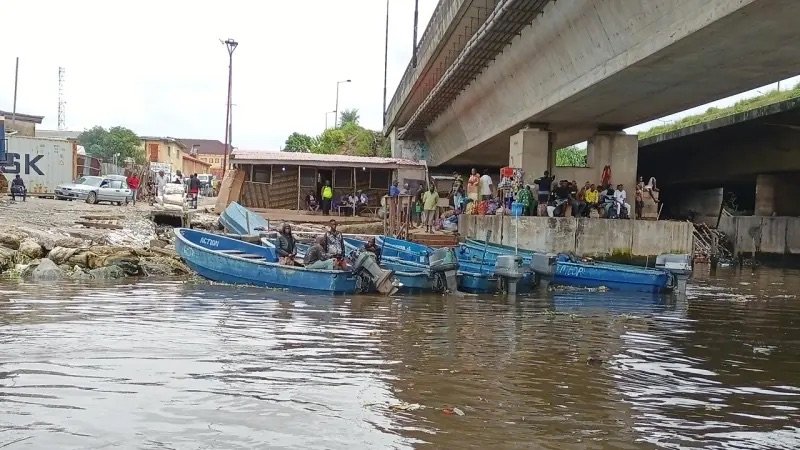
Passengers traveling through Lagos waterways faced a chaotic day as thick mats of water hyacinths brought boat operations to a standstill, leaving many stranded and frustrated. Commuters at the Badore Ferry Terminal in Ajah, hoping to bypass the usual holiday traffic, found themselves caught in an aquatic gridlock as invasive plants choked the waterways.
Tunde Adaranijo, a passenger heading to Ijede in Ikorodu for a church fellowship, expressed disappointment at the disruption. Arriving early at the jetty, he was disheartened to find that boat operators could not navigate through the tangled vegetation. “This is not encouraging at all,” he lamented, calling on the government to implement lasting solutions to what has become a yearly ordeal.
Another passenger, Ngozi Eze, recounted her frustration at the unreliability of what should be a faster alternative to Lagos’s congested roads. Planning to avoid the festive road traffic, she found herself stranded instead. “The government needs to prioritize regular clearing of the waterways to prevent this from happening every year,” she said, visibly upset.
Boat operators also bore the brunt of the crisis. Adewale Oladipo, a commercial boat operator, described the financial strain caused by the invasive plant. “The hyacinths damage our propellers, forcing us to halt services to avoid accidents,” he explained. “We often spend large sums on repairs, which could be avoided if the government addressed this issue effectively.”
Water hyacinth, an invasive aquatic plant notorious for its rapid spread during dry seasons, has plagued Lagos waterways for years. The plant’s dense growth obstructs navigation and damages boats, leaving both passengers and operators frustrated during peak travel periods. Experts like Deji Adeniyi have called for sustainable solutions, such as biological control agents and community-led monitoring programs, to combat the recurring menace.
In response, the Lagos State Waterways Authority (LASWA) assured the public that efforts are underway to address the crisis. A representative from LASWA revealed that clearing machines had been deployed to remove the hyacinths and pledged continued collaboration with stakeholders to ensure smooth navigation. “We understand the frustrations of commuters and operators,” the representative said. “The government remains committed to providing long-term solutions, including enhanced monitoring and consistent clearing efforts.”
As Lagosians grapple with the disruption, many are left questioning the effectiveness of current interventions. With the festive season in full swing and transportation demands at their peak, the recurring water hyacinth problem underscores the urgent need for innovative and sustainable approaches to keep the waterways clear.
