

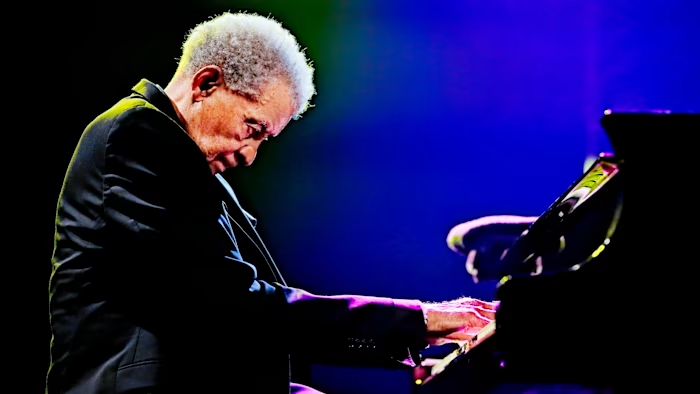
The world of music is mourning the loss of South African jazz icon Abdullah Ibrahim, the legendary pianist, composer, and cultural figure whose work helped define modern South African jazz and inspired generations of musicians across the globe.
Ibrahim passed away at the age of 91 in Germany following a brief illness, according to statements released by his family. His death marks the end of an extraordinary career that spanned more than seven decades and transformed the global understanding of African jazz.
Born Adolph Johannes Brand in Cape Town in 1934, Ibrahim emerged from South Africa’s vibrant but deeply divided cultural landscape and became one of the country’s most internationally respected musicians. Before adopting the name Abdullah Ibrahim after converting to Islam in 1968, he was widely known to audiences as Dollar Brand.
Throughout his career, Ibrahim developed a unique musical language that blended jazz traditions with African rhythms, spiritual influences, and the distinctive sounds of Cape Town.
His contribution to South African music extended far beyond performance.
In 1960, he helped establish the Jazz Epistles alongside fellow musicians including Hugh Masekela, creating what became recognised as South Africa’s first Black jazz group to record a full-length album. That recording remains an important moment in African music history.
Political conditions during apartheid eventually forced Ibrahim into exile, but his music continued reaching audiences internationally.
A major turning point came after legendary American jazz figure Duke Ellington discovered and supported his work in Europe, opening international doors that helped elevate his global profile.
One of Ibrahim’s most influential compositions, Mannenberg, released in 1974, became more than music—it evolved into a powerful symbol of resistance and hope during South Africa’s anti-apartheid struggle.
The piece remains one of the most important works in African jazz history and is still celebrated for its emotional depth and cultural impact.
His influence reached beyond politics and activism.
Across more than 70 albums and countless performances, Ibrahim built a body of work that connected African identity with international jazz audiences.
His catalogue included acclaimed projects such as African Piano, Water from an Ancient Well, and numerous recordings with his ensemble Ekaya.
Ibrahim also performed at Nelson Mandela’s 1994 presidential inauguration, further cementing his place in South African cultural history.
Tributes have continued pouring in from across Africa and around the world, with political leaders, artists, and fans remembering him as both a musical pioneer and a cultural ambassador.
South African President Cyril Ramaphosa praised Ibrahim’s contribution to music and his role in resisting racism and apartheid through art.
According to his family, Abdullah Ibrahim passed away peacefully with South Africa in his heart.
Though one of jazz’s most influential voices has fallen silent, his music and legacy are expected to continue inspiring future generations.
